
 ,
Kishor Chaulagain,
Amit Kumar Yadav,
Gautam Kumar Sah,
Navraj Khanal,
Arjun Paudel,
Abhinesh Khatri
,
Kishor Chaulagain,
Amit Kumar Yadav,
Gautam Kumar Sah,
Navraj Khanal,
Arjun Paudel,
Abhinesh Khatri
This work aims to compare three codes; ASCE 7-22, IS 1893:2016 and NBC 105:2020 in terms of lateral effect on RC building, focusing on the seismic force effect. Since all of the codes have different standards and factors, therefore it is expected that there will be some differences in the structural behavior. This research will contain analysis of building consisting of 5 RC buildings and comparison of several provisions. This research study will investigate the difference between seismic results between the all codes and if there might be any differences in the structural elements reinforcement percentage. In order to illustrate a real and accurate comparison, all these structures have been compared in similar circumstances; all of them were assumed to be designed in Nepal. This analysis has been performed using ETABS software. The ETABS software will be used in analysis. In this study building was analyzed to compare the base shear, storey displacement, storey drift, percentages of reinforcement and fundamental time period in accordance with Nepal National Building Code, Indian Standard and American Society of Civil Engineers guidelines. The analysis results indicated that NBC 105:2020 showed a higher value of base shear compared to the other codes. NBC 105:2020 showed higher inter storey drift than other two codes. The displacement obtained in NBC 105:2020 is found to be higher than other two codes. Fundamental time period is more in NBC 105:2020 than other two codes. The investigation revealed that the revised NBC 105:2020 displayed higher values for all response parameters analyzed. Based on the design outcomes, the ASCE codes exhibited the highest percentage of longitudinal rebar, while NBC 105:2020 depicted the lowest. Furthermore, the study emphasizes the adherence to building code regulations during construction. The findings of this study aim to equip designers with comprehensive knowledge regarding seismic provisions and standards to facilitate informed decision- making in their design activities.
| Published in | Landscape Architecture and Regional Planning (Volume 11, Issue 1) |
| DOI | 10.11648/j.larp.20261101.11 |
| Page(s) | 1-12 |
| Creative Commons |
This is an Open Access article, distributed under the terms of the Creative Commons Attribution 4.0 International License (http://creativecommons.org/licenses/by/4.0/), which permits unrestricted use, distribution and reproduction in any medium or format, provided the original work is properly cited. |
| Copyright |
Copyright © The Author(s), 2026. Published by Science Publishing Group |
RCC Framed Building, Seismic Parameter, ASCE
Codes/Standards | Seismic code |
|---|---|
Nepal National Building Code | NBC 105:2020 |
Indian Standard | IS 1893:2016 |
American Standard | ASCE 7–22 |
NBC 105:2020 | IS1893:2016 | clause 4.1.4 |
|---|---|---|
0.25 for Zone A | 0.10 for Zone I | Ss, S1 depend on location |
0.3 for Zone B | 0.16 for Zone II | |
0.35 for Zone C | 0.24 for Zone III | |
0.4 for Zone D | 0.36 for Zone IV | |
clause 4.1.4 | clause 4.1.4 |
NBC 105:2020 | IS1893:2016 | ASCE7-22 |
|---|---|---|
For ordinary structures I = 1 | For Ordinary structures I = 1 | For ordinary structures (I), Ie = 1 |
For important structures = 1.25 | Commercial structure I = 1.2 | Structures not in occupancy categories I, III or IV (II), Ie = 1 |
For critical structures I = 1.5 | For important structures I = 1.5 | For important structures (III), Ie = 1.25 For critical structures (IV), |
Table 8 (Clause 7.2.3) | Ie = 1.5 Risk Category (I, II, III, IV) | |
NBC 105:2020 | IS1893:2016 | ASCE7-22 |
|---|---|---|
Ductility Factor (Rμ, Rs) (SMRF) Rμ = 4; Rs = 1 Ωμ = 1.5; Ωs = 1.25 | Response Reduction Factor (R) R = 3 (OMRF) R = 5 (SMRF) | Response Modification Coefficient (R) R = 3 (OMRF) R = 5 (IMRF) R = 8 (SMRF) |
clause 5.3 & 5.4 | Table 9 (clause 7.2.6) |
NBC 105:2020 | IS1893:2016 | ASCE7-22 |
|---|---|---|
Total Dead load | Total Dead load | Total Dead load |
60% design live load is considered for storage, 30% for other purposes, | 25% design live load is considered up to 3 kPa, 50% above 3 kPa, and not considered for roofs | No consideration of live load (except storage) |
Table 5 of NBC 105:2020 | Clause 7.3 & 7.4, Table 10 | Cl. 12.7.2 |
NBC 105:2020 | IS1893:2016 | ASCE7-22 | ||||
|---|---|---|---|---|---|---|
Site class | N Value | Site Class | N Value | Site Class | Shear Velocity | N value |
Type A | >30 | Type I | >30 | Type A | >1524 | N/A |
(Stiff or Hard Soil) | Rock and Hard soil | Hard Rock | ||||
Type B | 10 to 30 | Type II Medium Soil | 10 to 30 | Type B | 762 to 1524 | N/A |
(Medium soil) | Rock | |||||
Type C | 4 to 10 | Type III Soft Soil | <30 | Type C | 366 to 762 | >50 |
(Soft soil) | Very Dense soil and soft rock | |||||
Type D | <4 | Type D | 183 to 366 | 15 to 50 | ||
(Very soft soil) | Stiff Soil | |||||
clause 4.1.3 | & | Type E Soft Clay Soil | <183 | <15 | ||
NBC 105:2020 | IS 1893:2016 | ASCE 7-22 |
|---|---|---|
1. 1.2DL + 1.5LL | 1. 1.2 (DL + LL + EQX) | 1. 1.4DL |
2. DL + 0.3LL + Ex | 2. 1.2 (DL + LL – EQX) | 2. 1.2DL+1.6LL |
3. DL + 0.3LL -Ex | 3. 1.2 (DL + LL + EQY) | 3. 1.40DL+0.5LL+(EQX+0.3EQY) |
4. DL + 0.3LL +Ey | 4. 1.2 (DL + LL – EQY) | 4. 1.40DL+0.5LL+(EQX-0.3EQY) |
5. DL + 0.3LL - Ey | 5. 1.5 (DL + LL) | 5. 1.40DL+0.5LL-(EQX+0.3EQY) |
6. 1.5 (DL + EQX) | 6. 1.40DL+0.5LL-(EQX-0.3EQY) | |
7. 1.5 (DL - EQX) | 7. 1.40DL+0.5LL+(EQY+0.3EQX) | |
8. 1.5 (DL + EQY) | 8. 1.40DL+0.5LL+(EQY-0.3EQX) | |
9. 1.5 (DL – EQY) | 9. 1.40DL+0.5LL-(EQY+0.3EQX) | |
10. 0.9 DL + 1.5 EQX | 10. 1.40DL+0.5LL-(EQY-0.3EQX) | |
11. 0.9 DL - 1.5 EQX | 11. 0.70DL+(EQX+0.3EQY) | |
12. 0.9 DL + 1.5 EQY | 12. 0.70DL+(EQX-0.3EQY) | |
13. 0.9 DL - 1.5 EQY | 13. 0.70DL-(EQX+0.3EQY) | |
14. 0.70DL-(EQX-0.3EQY) | ||
15. 0.70DL+(EQY+0.3EQX) | ||
16. 0.70DL+(EQY-0.3EQX) | ||
17. 0.70DL-(EQY+0.3EQX) | ||
18. 0.70DL-(EQY-0.3EQX) |
Building | Type | No. of Story | Height | Type of Soil |
|---|---|---|---|---|
1 | Commercial | G+6 STOREY | 24 | type D |
2 | Residential | G+4 STOREY | 18 | NBC 105:2020 |
3 | Residential | G+3 STOREY | 15 | (CL.4.1.3.4) |
4 | Residential | G+2 STOREY | 12 |
Code | Base Shear |
|---|---|
NBC105:2020 | 1299.15(SLS) |
1350.7(ULS) | |
IS 1893:2016 | 758.0079kN |
ASCE7-22 | 1259.23kN |
Code | Base Shear |
|---|---|
NBC105:2020 | 1354.52kN ULS |
1302.82kN SLS | |
IS 1893:2016 | 684.0483kN |
ASCE7-22 | 1250.8 kN |
Code | Base Shear |
|---|---|
NBC105:2020 | 1058.04kN ULS |
1017.65kN SLS | |
IS 1893:2016 | 598.651kN |
ASCE7-22 | 1019.672kN |
Code | Base Shear |
|---|---|
NBC105:2020 | 837.337 kN (SLS) |
805.377 kN (ULS) | |
ASCE7-22 | 774.38 |
IS 1893-2016 | 570.881 |
Code | Base Shear |
|---|---|
NBC105:2020 | 666.925 kN (SLS) |
693.391 kN (ULS) | |
IS 1893:2016 | 472.625 kN |
ASCE7-22 | 641.021 kN |
Code | Direction | Displacement |
|---|---|---|
NBC105:2020 | X SLS | 80.396 |
Y SLS | 70.594 | |
X ULS | 83.586 | |
Y ULS | 66.300 | |
IS 1893:2016 | X | 51.478 |
Y | 42.592 | |
ASCE7-22 | X | 78.207 |
Y | 68.471 |
Code | Direction | Displacement |
|---|---|---|
NBC105:2020 | X SLS | 50.0158 |
Y SLS | 44.616 | |
X ULS | 52 | |
Y ULS | 40.387 | |
IS 1893:2016 | X | 29.136 |
Y | 25.974 | |
ASCE 7-22 | X | 48.127 |
Y | 42.767 |
Code | Direction | Displacement |
|---|---|---|
NBC105:2020 | X SLS | 47.152 |
Y SLS | 42.949 | |
X ULS | 49.023 | |
Y ULS | 44.654 | |
IS 1893:2016 | X | 31.218 |
Y | 28.425 | |
ASCE 7-22 | X | 47.532 |
Y | 43.321 |
Code | Direction | Displacement |
|---|---|---|
NBC105:2020 | X SLS | 39.988 |
Y SLS | 37.016 | |
X ULS | 41.576 | |
Y ULS | 38.543 | |
ASCE7-22 | X | 38.345 |
Y | 35.542 | |
IS 1893-2016 | X | 32.353 |
Y | 29.991 |
Code | Direction | Displacement |
|---|---|---|
NBC105:2020 | X SLS | 33.396 |
Y SLS | 30.991 | |
X ULS | 34.721 | |
Y ULS | 32.22 | |
IS 1893:2016 | X | 26.8157 |
Y | 24.9025 | |
ASCE7-22 | X | 30.727 |
Y | 28.506 |
Code | Direction | Drift |
|---|---|---|
NBC105:2020 | X SLS | 0.004955 |
Y SLS | 0.004232 | |
X ULS | 0.005152 | |
Y ULS | 0.004196 | |
ASCE7-22 | X | 0.00438 |
Y | 0.00411 | |
IS 1893-2016 | X | 0.00304 |
Y | 0.00262 |
Code | Direction | Drift |
|---|---|---|
NBC105:2020 | X SLS | 0.003635 |
Y SLS | 0.003251 | |
X ULS | 0.00378 | |
Y ULS | 0.00338 | |
IS 1893:2016 | X | 0.001996 |
Y | 0.001767 | |
ASCE7-22 | X | 0.003503 |
Y | 0.003122 |
Code | Direction | Drift |
|---|---|---|
NBC105:2020 | X SLS | 0.004036 |
Y SLS | 0.003624 | |
X ULS | 0.004196 | |
Y ULS | 0.003767 | |
IS 1893:2016 | X | 0.00251 |
Y | 0.00224 | |
ASCE7-22 | X | 0.004057 |
Y | 0.00364 |
Code | Direction | Drift |
|---|---|---|
NBC105:2020 | X SLS | 0.004089 |
Y SLS | 0.003737 | |
X ULS | 0.004251 | |
Y ULS | 0.003885 | |
ASCE7-22 | X | 0.003939 |
Y | 0.003597 | |
IS 1893-2016 | X | 0.003131 |
Y | 0.002848 |
Code | Direction | Drift |
|---|---|---|
NBC105:2020 | X SLS | 0.003796 |
Y SLS | 0.00365 | |
X ULS | 0.004191 | |
Y ULS | 0.004031 | |
IS 1893:2016 | X | 0.003138 |
Y | 0.002827 | |
ASCE7-22 | X | 0.003754 |
Y | 0.0034 |
Code | Commercial | Residencial | |||
|---|---|---|---|---|---|
Building1 | Building2 | Building3 | Building4 | Building5 | |
NBC 105:2020 | 1.016 | 0.919 | 0.819 | 0.715 | 0.604 |
ASCE 7-22 | 0.813 | 0.736 | 0.655 | 0.572 | 0.48 |
IS 1893:2016 | 0.814 | 0.722 | 0.628 | 0.533 | 0.436 |
Code | Commercial | Residencial | |||
|---|---|---|---|---|---|
Building1 | Building2 | Building3 | Building4 | Building5 | |
NBC 105:2020 | 1.80% | 1.82% | 1.76% | 2.78% | 2.19% |
ASCE 7-22 | 1.81% | 1.83% | 1.76% | 2.79% | 2.47% |
IS 1893:2016 | 2.76% | 2.70% | 1.89% | 2.99% | 2.57% |
NBC | Nepal Building Code |
IS | Indian Standard |
ASCE | American Society of Civil Engineering |
GF | Ground Floor |
MRF | Moment Resisting Frame |
IBC | International Building Code |
USGS | United State Geological Survey |
| [1] |
United States Geological Survey. USGS: ASCE Hazard Tool. Available from:
https://ascehazardtool.org/ (accessed 06 February 2025). |
| [2] | Dhanvijay, Vinit; Telang, Deepa; Nair, Vikrant (2015). Comparative Study of Different Codes in Seismic Assessment. International Research Journal of Engineering and Technology (IRJET), Vol. 02, Issue 04, July 2015, pp. 1371-1381. Available: |
| [3] | Shah, Devendra & Chalotra, Shakshi. (2022). Comparative Study of RC Frame Building with NBC 105: 2020 and IS Code 1893: 2002. International Journal of Innovative Research in Engineering & Management (IJIREM), Vol. 9, Issue 4, pp. 68-73. |
| [4] | Sapkota, A., Sapkota B., Poudel, J., and Giri, S., (2024) “Comparative study on the seismic performance of a typical low-rise building in Nepal using different seismic codes” Article in Asian Journal of Civil Engineering. |
| [5] | Pandit, P., and Vasudev, M., (2019) “Comparative Analysis of NBC 105: 1994 And IS 1893: 2016 Seismic Codes With G+21 RC Building”, International Research Journal of Engineering and Technology (IRJET). Vol. 6, No. 11, PP. 1995-2000. |
| [6] | Shrestha, J., Paudel, N., Koirala, B., Giri, B., and Lamichhane, A., (2021) “Impact of Revised Code NBC105 on Assessment and Design of Low Rise Reinforced Concrete Buildings in Nepal” Journal of Institute of Engineering. Vol 16, No. 1 PP. 1-5. |
| [7] |
Islam, J., Abass, I., Meena, V., Kakrora, N., and Meena S., (2021) “Comparison of Storey Drift, Storey Displacement & Base Shear for Different Structural Systems”, International Journal of Engineering Development and Research. Vol 9, No. 1 PP. 140-146. Available:
https://www.irjmets.com/uploadedfiles/paper/issue_3_march_2022/20234/final/fin_irjmets1648370009.pdf |
| [8] | Banjara, R., Thapa D., Adhikari, S., and Katuwal, K., (2021) “Seismic Behaviour of Buildings as per NBC 105: 1994, NBC. 105: 2020 and IS 1893: 2016” Proceedings of 10th IOE Graduate Conference. Vol 10, PP. 1461-1471. |
| [9] | American Society of Civil Engineers. (2017). Minimum design loads and associated criteria for buildings and other structures. |
| [10] | Bureau of Indian Standards. (2000). IS 456: 2000 - Code of Practice for Plain and Reinforced Concrete. Bureau of Indian Standards. Available: |
| [11] | Bureau of Indian Standards. (2002). Indian Standard Code (IS 1893). Part I: Criteria for earthquake resistant design of structures: General provisions and buildings. Available: |
| [12] | Bureau of Indian Standards. (2016). Indian Standard Code (IS 1893). Part I: Criteria for earthquake resistant design of structures: General provisions and buildings. Available: |
| [13] | Chaulagain, H., Rodrigues, H., Jara, J., Spacone, E., & Varum, H. (2013). Seismic response of current RC buildings in Nepal: a comparative analysis of different design/construction. Engineering Structures, 49, 284-294. |
| [14] | Chaulagain, H., Rodrigues, H., Spacone, E., & Varum, H. (2015). Seismic response of current RC buildings in Kathmandu valley. Structural Engineering and Mechanics, 53(4), 791-818. |
| [15] | Department of Urban Development and Building Construction, M. of U. D. (DUDBC), G. of N. (GoN). (2019). Nepal National Building Code (NBC 105) commentary: Seismic design of buildings in Nepal. |
| [16] | Giri, P., Bhatt, A. D., Gautam, D., & Chaulagain, H. (2019). Comparison between the seismic codes of Nepal, India, Japan, and EU. Asian Journal of Civil Engineering, 20(2), 301-312. Available: |
| [17] | International Code Council. (2015). International Building Code (IBC). Falls Church, VA: International Code Council. Available: |
APA Style
Chaisir, G. S., Chaulagain, K., Yadav, A. K., Sah, G. K., Khanal, N., et al. (2026). Comparison of Seismic Parameter in RC Building Using NBC 105:2016, IS 1893:2016 and ASCE 7-22. Landscape Architecture and Regional Planning, 11(1), 1-12. https://doi.org/10.11648/j.larp.20261101.11
ACS Style
Chaisir, G. S.; Chaulagain, K.; Yadav, A. K.; Sah, G. K.; Khanal, N., et al. Comparison of Seismic Parameter in RC Building Using NBC 105:2016, IS 1893:2016 and ASCE 7-22. Landsc. Archit. Reg. Plan. 2026, 11(1), 1-12. doi: 10.11648/j.larp.20261101.11
@article{10.11648/j.larp.20261101.11,
  author = {Gokaran Singh Chaisir and Kishor Chaulagain and Amit Kumar Yadav and Gautam Kumar Sah and Navraj Khanal and Arjun Paudel and Abhinesh Khatri},
  title = {Comparison of Seismic Parameter in RC Building Using NBC 105:2016, IS 1893:2016 and ASCE 7-22},
  journal = {Landscape Architecture and Regional Planning},
  volume = {11},
  number = {1},
  pages = {1-12},
  doi = {10.11648/j.larp.20261101.11},
  url = {https://doi.org/10.11648/j.larp.20261101.11},
  eprint = {https://article.sciencepublishinggroup.com/pdf/10.11648.j.larp.20261101.11},
  abstract = {This work aims to compare three codes; ASCE 7-22, IS 1893:2016 and NBC 105:2020 in terms of lateral effect on RC building, focusing on the seismic force effect. Since all of the codes have different standards and factors, therefore it is expected that there will be some differences in the structural behavior. This research will contain analysis of building consisting of 5 RC buildings and comparison of several provisions. This research study will investigate the difference between seismic results between the all codes and if there might be any differences in the structural elements reinforcement percentage. In order to illustrate a real and accurate comparison, all these structures have been compared in similar circumstances; all of them were assumed to be designed in Nepal. This analysis has been performed using ETABS software. The ETABS software will be used in analysis. In this study building was analyzed to compare the base shear, storey displacement, storey drift, percentages of reinforcement and fundamental time period in accordance with Nepal National Building Code, Indian Standard and American Society of Civil Engineers guidelines. The analysis results indicated that NBC 105:2020 showed a higher value of base shear compared to the other codes. NBC 105:2020 showed higher inter storey drift than other two codes. The displacement obtained in NBC 105:2020 is found to be higher than other two codes. Fundamental time period is more in NBC 105:2020 than other two codes. The investigation revealed that the revised NBC 105:2020 displayed higher values for all response parameters analyzed. Based on the design outcomes, the ASCE codes exhibited the highest percentage of longitudinal rebar, while NBC 105:2020 depicted the lowest. Furthermore, the study emphasizes the adherence to building code regulations during construction. The findings of this study aim to equip designers with comprehensive knowledge regarding seismic provisions and standards to facilitate informed decision- making in their design activities.},
 year = {2026}
}
TY  - JOUR
T1  - Comparison of Seismic Parameter in RC Building Using NBC 105:2016, IS 1893:2016 and ASCE 7-22
AU  - Gokaran Singh Chaisir
AU  - Kishor Chaulagain
AU  - Amit Kumar Yadav
AU  - Gautam Kumar Sah
AU  - Navraj Khanal
AU  - Arjun Paudel
AU  - Abhinesh Khatri
Y1  - 2026/01/26
PY  - 2026
N1  - https://doi.org/10.11648/j.larp.20261101.11
DO  - 10.11648/j.larp.20261101.11
T2  - Landscape Architecture and Regional Planning
JF  - Landscape Architecture and Regional Planning
JO  - Landscape Architecture and Regional Planning
SP  - 1
EP  - 12
PB  - Science Publishing Group
SN  - 2637-4374
UR  - https://doi.org/10.11648/j.larp.20261101.11
AB  - This work aims to compare three codes; ASCE 7-22, IS 1893:2016 and NBC 105:2020 in terms of lateral effect on RC building, focusing on the seismic force effect. Since all of the codes have different standards and factors, therefore it is expected that there will be some differences in the structural behavior. This research will contain analysis of building consisting of 5 RC buildings and comparison of several provisions. This research study will investigate the difference between seismic results between the all codes and if there might be any differences in the structural elements reinforcement percentage. In order to illustrate a real and accurate comparison, all these structures have been compared in similar circumstances; all of them were assumed to be designed in Nepal. This analysis has been performed using ETABS software. The ETABS software will be used in analysis. In this study building was analyzed to compare the base shear, storey displacement, storey drift, percentages of reinforcement and fundamental time period in accordance with Nepal National Building Code, Indian Standard and American Society of Civil Engineers guidelines. The analysis results indicated that NBC 105:2020 showed a higher value of base shear compared to the other codes. NBC 105:2020 showed higher inter storey drift than other two codes. The displacement obtained in NBC 105:2020 is found to be higher than other two codes. Fundamental time period is more in NBC 105:2020 than other two codes. The investigation revealed that the revised NBC 105:2020 displayed higher values for all response parameters analyzed. Based on the design outcomes, the ASCE codes exhibited the highest percentage of longitudinal rebar, while NBC 105:2020 depicted the lowest. Furthermore, the study emphasizes the adherence to building code regulations during construction. The findings of this study aim to equip designers with comprehensive knowledge regarding seismic provisions and standards to facilitate informed decision- making in their design activities.
VL  - 11
IS  - 1
ER  -
Department of Civil Engineering, Kantipur Engineering College, Lalitpur, Nepal
Department of Civil Engineering, Kantipur Engineering College, Lalitpur, Nepal
Department of Civil Engineering, Kantipur Engineering College, Lalitpur, Nepal
Department of Civil Engineering, Kantipur Engineering College, Lalitpur, Nepal
Department of Civil Engineering, Kantipur Engineering College, Lalitpur, Nepal
Department of Civil Engineering, Kantipur Engineering College, Lalitpur, Nepal
Department of Civil Engineering, Kantipur Engineering College, Lalitpur, Nepal
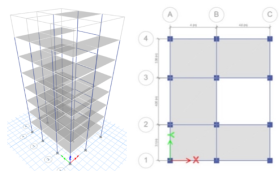
Figure 1. 3D and Plan of Building 1.
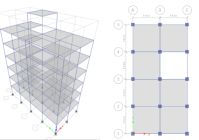
Figure 2. 3D and Plan of Building 2.
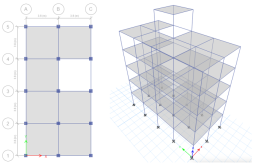
Figure 3. 3D and Plan of Building 3.
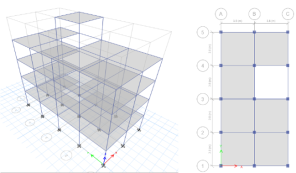
Figure 4. 3D and Plan of Building 4.
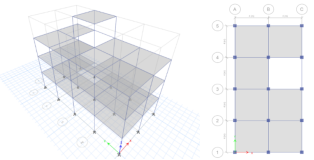
Figure 5. 3D and Plan of Building 5.
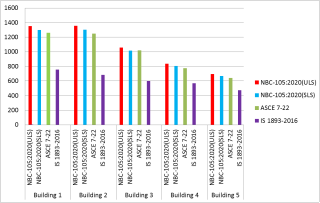
Figure 6. Base shear comparison.
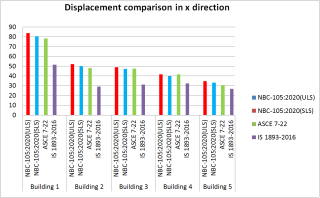
Figure 7. Displacement comparison in x direction.
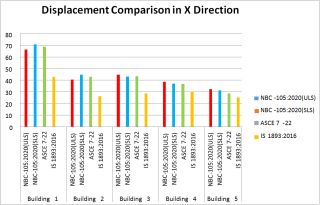
Figure 8. Displacement comparison in y direction.
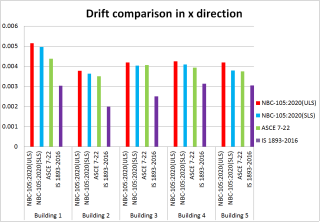
Figure 9. Drift comparison in x direction.
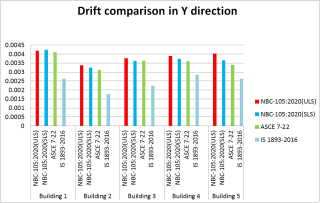
Figure 10. Drift comparison in y direction.
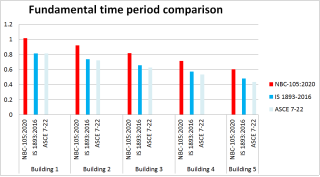
Figure 11. Fundamental time period comparison.
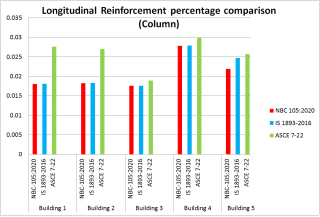
Figure 12. Longitudinal Reinforcement percentage comparison.



 Share This Article
 Twitter
 Linked In
 Facebook
 Copy
Copy Download